University of Maryland Baltimore County
Department of Computer Science and Electrical Engineering
CMSC 611, Fall 2020
Advanced Computer Architecture
Tuesday and Thursday 11:30 AM - 12:45 PM, Online
Course Information
 Instructor and TA
Contact Information
Instructor and TA
Contact Information

Dr. Mohamed Younis
Office: ITE 318
E-mail: younis@cs.umbc.edu
URL: http://www.cs.umbc.edu/~younis
Research Lab. Embedded Systems and Networks (ESNet)
Office hours: Tuesday and Thursday 1:00 PM - 2:00 PM
Research interest:
Sensor Networks, Wireless Communications, Fault tolerant computing, Information Security, Real-time systems
Teaching assistant
TA: Yao Yao
Office: ITE 344
E-mail: OF90379@umbc.edu
Office hours: Monday and Wednesday 3:30 - 4:30 PM
Textbook:
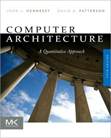
Computer Architecture: A Quantitative Approach, 5th or 6th Edition
John L. Hennessy and David A. Patterson
Morgan Kaufmann Publishers, ISBN 978-0-12-383872-8
Course Outline
1. Quantitative Principles of Computer Design
• The Task of a Computer Designer
• Technology and Computer Usage Trends
• Cost and Trends in Cost
• Measuring and Reporting Performance
• Benchmarks and metrics
2. Instruction Set Principles and Examples
• Classification of Instruction Set Architectures
• Instruction Formats and Semantics
• Memory Addressing Modes
• Operations in the Instruction Set
• Encoding and Instruction Set
• The Role of Compilers
3. Advanced Pipelining and Instruction-Level Parallelism
• Basic Pipeline Operations
• Data and Control Pipeline Hazards
• Instruction-Level Parallelism
• Dynamic Instruction Scheduling and Branch Prediction
4. Memory-Hierarchy Design
• Cache Design Issues
• Performance Evaluation
• Virtual Memory Addressing
• Memory Protection Mechanisms
• Memory coherency techniques
5. Storage Systems
• Types of Storage Devices
• Buses-Connecting I/O Devices to CPU/Memory
• I/O Performance Measures
• Reliability, Availability, and RAID
• Interfacing to an Operating System
6. Thread Level Parallelism
• Multiprocessor Systems and Applications
• Centralized Shared-Memory Architectures
• Distributed Shared-Memory Architectures
• Execution Synchronization
• Models of Memory Consistency
7. Data Level Parallelism (Time Permitting)
• Vector Processing
• Support for Multimedia Applications
• Graphics Processing Units
8. Warehouse-Scale Computers (Time Permitting)
Course work
Grade distribution
Midterm exam
25%
Final exam
30%
Project
25%
Homework
20%
· Four assignments will be given and their average is to be normalized to %20 of the final grade
· Assignments are due in class. Late assignments are not accepted.
· The project is mainly hardware design assignments by writing an architecture simulator in a high level programming language, e.g., C.
· UMBC rules apply to cheating/copying. You may work together and discuss homework and the project. You must do your own work and not copy from anyone else.
· Copying/cheating will result in a minimum punishment of a zero grade for the assignment or project.
Course grade
Range
A
90% - 100%
B
80% -89.9%
C
70% -79.9%
D
60% - 69.9%
• Academic Integrity Statement:
“By enrolling is this course, each student assumes the responsibilities of an active participant in UMBC's scholarly community in which everyone's academic work and behavior and held to the highest standards of honesty. Cheating, fabrication, plagiarism, and helping others to commit these acts are all forms of academic dishonesty, and they are wrong. Academic misconduct could result in disciplinary action that may include, but is not limited to, suspension or dismissal. To find useful information about avoiding plagiarism infractions through appropriate citations, or to read the full policy regarding student academic misconduct for the graduate school, please see http://www.umbc.edu/provost/integrity.
• Title IX/Sexual Misconduct Statement:
“ Any student who has experienced sexual harassment or assault, relationship violence, and/or stalking is encouraged to seek support and resources. There are a number of resources available to you. With that said, as an instructor, I am considered a Responsible Employee, per UMBC'S interim Policy on Prohibited Sexual Misconduct, Interpersonal Violence, and Other Related Misconduct. This means that while I am here to listen and support you, I am required to report disclosures of sexual assault, domestic violence, relationship violence, stalking, and/or gender-based harassment to the University's Title IX Coordinator. The purpose of these requirements is for the University to inform you of options, supports, and resources. You can utilize support and resources even if you do not want to take any further action. You will not be forced to file a police report, but please be aware, depending on the nature of the offense, the University may take action.
If you need to speak with someone in confidence about an incident, UMBC has the following Confidential Resources available to support you:
- The Counseling Center: 410-455-2742 (M-F 8:30-5:00)
- University Health Services: 410-455-2542 (M-F 8:30-5:00)
- For after-hours emergency consultation, call the police at 410-455-5555
Other on-campus supports and resources:
- The Women's Center (available to students of all genders): 410-455-2714 (M-Th 9:306, F 9:30-4:00)
- Title IX Coordinator: 410-455-1606 (9:00-5:00)
Child Abuse and Neglect:
Please note that Maryland law requires that I report all disclosures or suspicions of child abuse or neglect to the Department of Social Service and/or the police. /span>.
|
Lecture |
Date |
Subject |
|
1 |
August 27, 2020 |
|
|
2 |
September 1, 2020 |
Cost and Performance of Computers
|
|
3 |
September 3, 2020 |
Performance Summary and Benchmarks
|
|
4 |
September 8, 2020 |
Instruction Set Architecture (I)
|
|
5 |
September 10, 2020 |
Instruction Set Architecture (II)
|
|
6 |
September 15, 2020 |
Introduction to Pipelining
|
|
7 |
September 17, 2020 |
Pipeline Hazards
|
|
8 |
September 22, 2020 |
Control Hazards and Exception Handling
|
|
9 |
September 24, 2020 |
Pipeline Implementation Challenges
|
|
10 |
September 29, 2020 |
Instruction Level Parallelism
|
|
11 |
October 1, 2020 |
Dynamic Pipeline Scheduling
|
|
12 |
October 6, 2020
|
Dynamic Branch Prediction
|
|
13 |
October 8, 2020 |
Tomasulo's Dynamic Instruction Scheduling Algorithm
|
|
14 |
October 13, 2020 |
ILP with Multiple Instruction Issue
|
|
15 |
October 15, 2017 |
Review |
|
16 |
October 20, 2020 |
Midterm exam |
|
17 |
October 22, 2020 |
Hardware Assisted Speculative Execution |
|
18 |
October 27, 2020 |
Memory Hierarchy and Basics of Cache
|
|
19 |
October 29, 2020 |
Reducing Cache Miss Rate
|
|
20 |
October 31, 2020 |
Optimizing Cache Performance
|
|
21 |
November 5, 2020 |
Main Memory
|
|
22 |
November 10, 2020 |
I/O Systems
|
|
23 |
November 12, 2020 |
Performance and Interfacing I/O Devices
|
|
24 |
November 17, 2020 |
Introduction to Multiprocessor Systems
|
|
25 |
November 19, 2020 |
Vector Processing (time permitting) |
|
26 |
November 24, 2020 |
Multimedia SIMD and Graphic Processing Units (time permitting) |
|
27 |
December 1, 2020 |
Cache Coherence Protocols
|
|
28 |
December 3, 2020 |
Warehouse-Scale Computers (time permitting) |
|
29 |
December 8, 2020 |
Review |
|
30 |
December 10, 2020 |
Final exam (10:30 AM-12:30 PM) |

Assignment
Date Out
Due Date
Assignment #1
September 10, 2020
September 17, 2020
Assignment #2
September 24, 2020
October 1, 2017
Assignment #3
October 8, 2020
October 15, 2020
Assignment #4
November 17, 2020
November 24, 2020
Back to top
|
Project |
Date Out |
Due Date |
|
Term Project |
October 8, 2020 |
December 1, 2020 |
Back to top