Release 8.1.5
A67846-01
 Library |
 Product |
 Contents |
 Index |
| Oracle Call Interface Programmer's Guide Release 8.1.5 A67846-01 |
|


This chapter describes the OCI navigational functions which are used to navigate through objects retrieved from an Oracle database server. It also contains the descriptions of the functions which are used to obtain type descriptor objects (TDOs). The chapter contains the following sections:
Note: The functions described in this chapter are only available if you have installed the Oracle8i Enterprise Edition.
In an object navigational paradigm, data is represented as a graph of objects connected by references. Objects in the graph are reached by following the references. The OCI provides a navigational interface to objects in the Oracle server. Those calls are described in this chapter.
The OCI object environment is initialized when the application calls OCIInitialize() in OCI_OBJECT mode.
See Also: For more information about using the calls in this chapter, refer to Chapter 10, "OCI Object-Relational Programming", and Chapter 13, "Object Cache and Object Navigation".
An object instance is an occurrence of a type defined in an Oracle database. This section describes how an object instance can be represented in OCI. See Figure 16-1. In OCI, an object instance can be classified based on the type, the lifetime and referenceability:
A value can be standalone or embedded. A standalone value is usually obtained by issuing a select statement. OCI also allows the client program to select a row of object table into a value by issuing a SQL statement. A referenceable object in the database can be represented as a value which cannot be identified by a reference. A standalone value can also be an out-of-line attribute in an object, such as VARCHAR or raw, or an out-of-line element in a collection, such as VARCHAR, raw, or object.
An embedded value is physically included in a containing instance. An embedded value can be an in-line attribute in an object. such as number or nested object, or an in-line element in a collection.
All values are considered to be transient by OCI, which means that OCI does not support automatic flushing a value to the database, and the client has to explicitly execute a SQL statement to store a value into the database. For embedded values, they are flushed when their containing instance are flushed.
Figure 16-1 shows how instances can be classified according to their type and lifetime:
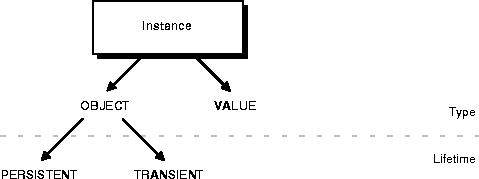
The distinction between various instances is further illustrated by the following table:
In the remainder of this chapter, the following terms will be used:
For a further discussion of the terms used to refer to different types of objects, please see "Persistent Objects, Transient Objects, and Values".
The entries for each function contain the following information:
A brief description of what the function does.
A code snippet showing the syntax for calling the function, including the ordering and types of the parameters.
Detailed information about the function if available. This may include restrictions on the use of the function, or other information that might be useful when using the function in an application.
A description of each of the function's parameters. This includes the parameter's mode. The mode of a parameter has three possible values, as described below:
A description of what value is returned by the function if the function returns something other than the standard return codes listed above.
A list of related calls which may provide additional useful information.
The OCI navigational functions typically return one of the following values:
Function-specific return information follows the description of each function in this chapter. Information about specific error codes returned by each function is presented in the following section.
See Also: For more information about return codes and error handling, see the section "Error Handling".
For a table showing the number of server roundtrips required for individual OCI cache and object functions, refer to Appendix C, "OCI Function Server Roundtrips".
Table 16-1 lists the external Oracle error codes which can be returned by each of the OCI navigational functions. The list following the table identifies what each error represents.
The ORA errors in Table 16-1 have the following meanings.
This section describes the OCI flush or refresh functions.
| Function/Page | Purpose |
|---|---|
|
Flush modified persistent objects in cache to server |
|
|
Refresh pinned persistent objects |
|
|
Flush a modified persistent object to the server |
|
|
Refresh a persistent object |
Flushes modified persistent objects to the server
sword OCICacheFlush ( OCIEnv              *env,
                      OCIError            *err,
                      CONST OCISvcCtx     *svc,
                      dvoid               *context,
                      OCIRef              *(*get)
                                          ( dvoid   *context,
                                            ub1     *last ),
                      OCIRef              **ref );
The OCI environment handle initialized in object mode. See the description of OCIEnvCreate() and OCIInitialize() in Chapter 15 for more information.
The OCI error handle. If there is an error, it is recorded in err and this function returns OCI_ERROR. Obtain diagnostic information by calling OCIErrorGet().
OCI service context.
Specifies an user context that is an argument to the client callback function get. This parameter is set to NULL if there is no user context.
A client-defined function which acts an iterator to retrieve a batch of dirty objects that need to be flushed. If the function is not NULL, this function will be called to get a reference of a dirty object. This is repeated until a null reference is returned by the client function or the parameter last is set to TRUE. The parameter context is passed to get() for each invocation of the client function. This parameter should be NULL if user callback is not given. If the object that is returned by the client function is not a dirtied persistent object, the object is ignored.
All the objects that are returned from the client function must be newed or pinned using the same service context, otherwise an error is signalled. Note that the cache flushes the returned objects in the order in which they were marked dirty.
If this parameter is passed as NULL (e.g., no client-defined function is provided), then all dirty persistent objects for the given service context are flushed in the order in which they were dirtied.
If there is an error in flushing the objects (*ref) will point to the object that is causing the error. If ref is NULL, then the object will not be returned. If *ref is NULL, then a reference will be allocated and set to point to the object. If *ref is not NULL, then the reference of the object is copied into the given space. If the error is not caused by any of the dirtied object, the given REF is initialized to be a NULL reference (OCIRefIsNull(*ref) is TRUE).
The REF is allocated for session duration (OCI_DURATION_SESSION). The application can free the allocated REF using the OCIObjectFree() function.
This function flushes the modified persistent objects from the object cache to the server. The objects are flushed in the order that they are newed or marked updated or deleted. See OCIObjectFlush() for more information about flushing.
This function incurs at most one network round-trip.
Refreshes all pinned persistent objects in the cache.
sword OCICacheRefresh ( OCIEnv            *env,
                       OCIError           *err,
                       CONST OCISvcCtx    *svc,
                       OCIRefreshOpt      option,
                       dvoid              *context,
                       OCIRef             *(*get)(dvoid *context),
                       OCIRef             **ref );
The OCI environment handle initialized in object mode. See the description of OCIEnvCreate() and OCIInitialize() in Chapter 15 for more information.
The OCI error handle. If there is an error, it is recorded in err and this function returns OCI_ERROR. Obtain diagnostic information by calling OCIErrorGet().
OCI service context.
If OCI_REFRESH_LOADED is specified, all objects that are loaded within the transaction are refreshed. If the option is OCI_REFRESH_LOADED and the parameter get is not NULL, this function will ignore the parameter.
Specifies an user context that is an argument to the client callback function get. This parameter is set to NULL if there is no user context.
A client-defined function which acts an iterator to retrieve a batch of objects that need to be refreshed. If the function is not NULL, this function will be called to get a reference of an object. If the reference is not NULL, then the object will be refreshed. These steps are repeated until a null reference is returned by this function. The parameter context is passed to get() for each invocation of the client function. This parameter should be NULL if user callback is not given.
If there is an error in refreshing the objects, (*ref) will point to the object that is causing the error. If ref is NULL, then the object will not be returned. If *ref is NULL, then a reference will be allocated and set to point to the object. If *ref is not NULL, then the reference of the object is copied into the given space. If the error is not caused by any of the object, the given ref is initialized to be a NULL reference (OCIRefIsNull(*ref) is TRUE).
This function refreshes all pinned persistent objects and all unpinned persistent objects are freed from the object cache.
For more information about refreshing, see the description of OCIObjectRefresh(), and the section "Refreshing an Object Copy".
Warning: When objects are refreshed, the secondary-level memory of those objects could potentially move to a different place in memory. As a result, any pointers to attributes which were saved prior to this call may be invalidated. Examples of attributes using secondary-level memory include OCIString *, OCIColl *, and OCIRaw *.
Flushes a modified persistent object to the server.
sword OCIObjectFlush ( OCIEnv        *env,
                       OCIError      *err,
                       dvoid         *object );
The OCI environment handle initialized in object mode. See the description of OCIEnvCreate() and OCIInitialize() in Chapter 15 for more information.
The OCI error handle. If there is an error, it is recorded in err and this function returns OCI_ERROR. Obtain diagnostic information by calling OCIErrorGet().
A pointer to the persistent object. The object must be pinned before this call.
This function flushes a modified persistent object to the server. An exclusive lock is obtained implicitly for the object when it is flushed. When the object is written to the server, triggers may be fired. This function returns an error for transient objects and values, and for unmodified persistent objects.
Objects can be modified by triggers at the server. To keep objects in the cache consistent with the database, an application can free or refresh objects in the cache.
If the object to flush contains an internal LOB attribute and the LOB attribute was modified due to an OCIObjectCopy(), OCILobAssign(), or OCILobLocatorAssign() or by assigning another LOB locator to it, then the flush makes a copy of the LOB value that existed in the source LOB at the time of the assignment or copy of the internal LOB locator or object. For more information on LOB functions, see "LOB Functions".
OCIObjectPin(), OCICacheFlush()
Refreshes a persistent object from the most current database snapshot.
sword OCIObjectRefresh ( OCIEnv        *env,
                         OCIError      *err,
                         dvoid         *object );
The OCI environment handle initialized in object mode. See the description of OCIEnvCreate() and OCIInitialize() in Chapter 15 for more information.
The OCI error handle. If there is an error, it is recorded in err and this function returns OCI_ERROR. Obtain diagnostic information by calling OCIErrorGet().
A pointer to the persistent object, which must already be pinned.
This function refreshes an object with data retrieved from the latest snapshot in the server. An object should be refreshed when the objects in the object cache are inconsistent with the objects at the server.
Note: When an object is flushed to the server, triggers can be fired to modify more objects in the server. The same objects (modified by the triggers) in the object cache become out-of-date, and must be refreshed before they can be locked or flushed.
This occurs when the user issues a SQL statement or PL/SQL procedure to modify any object in the server.
Warning: Modifications made to objects (dirty objects) since the last flush are lost if object are refreshed by this function.
The various meta-attribute flags and durations of an object are modified after being refreshed:
| Object Attribute | Status After Refresh |
|---|---|
|
existent |
set to appropriate value |
|
pinned |
unchanged |
|
allocation duration |
unchanged |
|
pin duration |
unchanged |
The object that is refreshed will be replaced-in-place. When an object is replaced-in-place, the top-level memory of the object will be reused so that new data can be loaded into the same memory address. The top level memory of the null structure is also reused. Unlike the top-level memory chunk, the secondary memory chunks will be freed and reallocated.
You should be careful when writing functionality that holds on to a pointer to the secondary memory chunk, such as assigning the address of a secondary memory to a local variable, because this pointer can become invalid after the object is refreshed.
This function does nothing for transient objects or values.
This section describe the OCI mark or unmark Object and Cache functions.
Unmarks all dirty objects in the object cache.
sword OCICacheUnmark ( OCIEnv            *env,
                       OCIError          *err,
                       CONST OCISvcCtx   *svc );
The OCI environment handle initialized in object mode. See the description of OCIEnvCreate() and OCIInitialize() in Chapter 15 for more information.
The OCI error handle. If there is an error, it is recorded in err and this function returns OCI_ERROR. Obtain diagnostic information by calling OCIErrorGet().
OCI service context.
If a connection is specified, this function unmarks all dirty objects in that connection. Otherwise, all dirty objects in the cache are unmarked. See OCIObjectUnmark() for more information about unmarking an object.
Marks a standalone instance as deleted, given a pointer to the instance.
sword OCIObjectMarkDelete ( OCIEnv        *env,
                            OCIError      *err,
                            dvoid         *instance );
The OCI environment handle initialized in object mode. See the description of OCIEnvCreate() and OCIInitialize() in Chapter 15 for more information.
The OCI error handle. If there is an error, it is recorded in err and this function returns OCI_ERROR. Obtain diagnostic information by calling OCIErrorGet().
Pointer to the instance. It must be standalone, and if it is an object it must be pinned.
This function accepts a pointer to a standalone instance and marks the object as deleted. The object is freed according to the following rules:
The object is marked deleted. The memory of the object is not freed. The object is deleted in the server when the object is flushed.
The object is marked deleted. The memory of the object is not freed.
This function frees a value immediately.
OCIObjectMarkDeleteByRef(), OCIObjectGetProperty()
Marks an object as deleted, given a reference to the object.
sword OCIObjectMarkDeleteByRef ( OCIEnv         *env,
                                 OCIError       *err,
                                 OCIRef         *object_ref );
The OCI environment handle initialized in object mode. See the description of OCIEnvCreate() and OCIInitialize() in Chapter 15 for more information.
The OCI error handle. If there is an error, it is recorded in err and this function returns OCI_ERROR. Obtain diagnostic information by calling OCIErrorGet().
Reference to the object to be deleted.
This function accepts a reference to an object, and marks the object designated by object_ref as deleted. The object is marked and freed as follows:
If the object is not loaded, then a temporary object is created and is marked deleted. Otherwise, the object is marked deleted.
The object is deleted in the server when the object is flushed.
The object is marked deleted. The object is not freed until it is unpinned.
OCIObjectMarkDelete(), OCIObjectGetProperty()
Marks a persistent object as updated, or dirty.
sword OCIObjectMarkUpdate ( OCIEnv        *env,
                            OCIError      *err,
                            dvoid         *object );
The OCI environment handle initialized in object mode. See the description of OCIEnvCreate() and OCIInitialize() in Chapter 15 for more information.
The OCI error handle. If there is an error, it is recorded in err and this function returns OCI_ERROR. Obtain diagnostic information by calling OCIErrorGet().
A pointer to the persistent object, which must already be pinned.
This function marks a persistent object as updated, or dirty. The following special rules apply to different types of objects. The dirty status of an object may be checked by calling OCIObjectIsLocked().
This function marks the specified persistent object as updated.
The persistent objects will be written to the server when the object cache is flushed. The object is not locked or flushed by this function. It is an error to update a deleted object.
After an object is marked updated and flushed, this function must be called again to mark the object as updated if it has been dirtied after it is being flushed.
This function marks the specified transient object as updated. The transient objects will NOT be written to the server. It is an error to update a deleted object.
This function is an no-op for values.
For more information about the use of this function, see "Marking Objects and Flushing Changes".
OCIObjectPin(), OCIObjectGetProperty()
Unmarks an object as dirty.
sword OCIObjectUnmark ( OCIEnv       *env,
                        OCIError     *err,
                        dvoid        *object );
The OCI environment handle initialized in object mode. See the description of OCIEnvCreate() and OCIInitialize() in Chapter 15 for more information.
The OCI error handle. If there is an error, it is recorded in err and this function returns OCI_ERROR. Obtain diagnostic information by calling OCIErrorGet().
Pointer to the persistent object. It must be pinned.
This function unmarks the specified persistent object as dirty. Changes that are made to the object will not be written to the server. If the object is marked locked, it remains marked locked. The changes that have already made to the object will not be undone implicitly.
This function is an no-op for values. This means that the function will have no effect if called on a value.
Unmarks an object as dirty, given a REF to the object.
sword OCIObjectUnmarkByRef ( OCIEnv      *env,
                             OCIError    *err,
                             OCIRef      *ref );
The OCI environment handle initialized in object mode. See the description of OCIEnvCreate() and OCIInitialize() in Chapter 15 for more information.
The OCI error handle. If there is an error, it is recorded in err and this function returns OCI_ERROR. Obtain diagnostic information by calling OCIErrorGet().
Reference of the object. It must be pinned.
This function unmarks an object as dirty. This function is identical to OCIObjectUnmark(), except that it takes a REF to the object as an argument.
This function unmarks the specified persistent object as dirty. Changes that are made to the object will not be written to the server. If the object is marked locked, it remains marked locked. The changes that have already made to the object will not be undone implicitly.
This function is a no-op for values.
This section describes the OCI get object status functions.
| Function/Page | Purpose |
|---|---|
|
Get the existent status of an instance |
|
|
Get the status of a particular object property |
|
|
Get the dirtied status of an instance |
|
|
Get the locked status of an instance |
Returns the existence meta-attribute of a standalone instance.
sword OCIObjectExists ( OCIEnv         *env,
                        OCIError       *err,
                        dvoid          *ins,
                        boolean        *exist );
The OCI environment handle initialized in object mode. See the description of OCIEnvCreate() and OCIInitialize() in Chapter 15 for more information.
The OCI error handle. If there is an error, it is recorded in err and this function returns OCI_ERROR. Obtain diagnostic information by calling OCIErrorGet().
Pointer to an instance. If it is an object, it must be pinned.
Return value for the existence status.
This function returns the existence of an instance. If the instance is a value, this function always returns TRUE. The instance must be a standalone persistent or transient object.
For more information about object meta-attributes, see "Object Meta-Attributes".
Retrieve a given property of an object.
sword OCIObjectGetProperty ( OCIEnv              *envh,
                             OCIError            *errh,
                             CONST dvoid         *obj,
                             OCIObjectPropId     propertyId,
                             dvoid               *property,
                             ub4                 *size );
The OCI environment handle initialized in object mode. See the description of OCIEnvCreate() and OCIInitialize() in Chapter 15 for more information.
The OCI error handle. If there is an error, it is recorded in err and this function returns OCI_ERROR. Obtain diagnostic information by calling OCIErrorGet().
The object whose property is returned.
The identifier which identifies the desired property.
The buffer into which the desired property is copied.
On input, this parameter specifies the size of the property buffer passed by caller.
On output it contains the size in bytes of the property returned. This parameter is required for string-type properties only, such as OCI_OBJECTPROP_SCHEMA, OCI_OBJECTPROP_TABLE). For non-string properties this parameter is ignored since the size is fixed.
This function returns the specified property of the object. The desired property is identified by propertyId. The property value is copied into property and for string typed properties the string size is returned via size.
Objects are classified as persistent, transient and value depending upon the lifetime and referenceability of the object. Some of the properties are applicable only to persistent objects and some others only apply to persistent and transient objects. An error is returned if the user tries to get a property which in not applicable to the given object. To avoid such an error, the user should first check whether the object is persistent or transient or value (OCI_OBJECTPROP_LIFETIME property) and then appropriately query for other properties.
The different property ids and the corresponding type of property argument are given below.
This identifies whether the given object is a persistent object or a transient object or a value instance. The property argument must be a pointer to a variable of type OCIObjectLifetime. Possible values include:
This returns the schema name of the table in which the object exists. An error is returned if the given object points to a transient instance or a value. If the input buffer is not big enough to hold the schema name an error is returned, the error message will communicate the required size. Upon success, the size of the returned schema name in bytes is returned via size. The property argument must be an array of type text and size should be set to size of array in bytes by the caller.
This returns the table name in which the object exists. An error is returned if the given object points to a transient instance or a value. If the input buffer is not big enough to hold the table name an error is returned, the error message will communicate the required size. Upon success, the size of the returned table name in bytes is returned via size. The property argument must be an array of type text and size should be set to size of array in bytes by the caller.
This returns the pin duration of the object. An error is returned if the given object points to a value instance. The property argument must be a pointer to a variable of type OCIDuration. Valid values include
For more information about durations, see "Object Duration".
This returns the allocation duration of the object. The property argument must be a pointer to a variable of type OCIDuration. Valid values include:
For more information about durations, see "Object Duration".
This returns the lock status of the object. The possible lock statuses are enumerated by OCILockOpt. An error is returned if the given object points to a transient or value instance. The property argument must be a pointer to a variable of type OCILockOpt. Note, the lock status of an object can also be retrieved by calling OCIObjectIsLocked(). Valid values include:
See Also: For information about the NOWAIT option, see "Locking With the NOWAIT Option".
This returns the dirty status and indicates whether the object is a new object, updated object or deleted object. An error is returned if the given object points to a transient or value instance. The property argument must be of type OCIObjectMarkStatus. Valid values include:
The following macros are available to test the object mark status:
This identifies whether the specified object is a view object or not. If the property value returned is TRUE, it indicates the object is a view otherwise it is not. An error is returned if the given object points to a transient or value instance. The property argument must be of type boolean.
OCIObjectLock(), OCIObjectMarkDelete(), OCIObjectMarkUpdate(), OCIObjectPin(), OCIObjectPin()
Checks to see if an object is marked as dirty.
sword OCIObjectIsDirty ( OCIEnv       *env,
                         OCIError     *err,
                         dvoid        *ins,
                         boolean      *dirty );
The OCI environment handle initialized in object mode. See the description of OCIEnvCreate() and OCIInitialize() in Chapter 15 for more information.
The OCI error handle. If there is an error, it is recorded in err and this function returns OCI_ERROR. Obtain diagnostic information by calling OCIErrorGet().
Pointer to an instance.
Return value for the dirty status.
The instance passed to this function must be standalone. If the instance is an object, the instance must be pinned.
This function returns the dirty status of an instance. If the instance is a value, this function always returns FALSE for the dirty status.
OCIObjectMarkUpdate(), OCIObjectGetProperty()
Get lock status of an object.
sword OCIObjectIsLocked ( OCIEnv       *env,
                          OCIError     *err,
                          dvoid        *ins,
                          boolean      *lock );
The OCI environment handle initialized in object mode. See the description of OCIEnvCreate() and OCIInitialize() in Chapter 15 for more information.
The OCI error handle. If there is an error, it is recorded in err and this function returns OCI_ERROR. Obtain diagnostic information by calling OCIErrorGet().
Pointer to an instance. The instance must be standalone, and if it is an object it must be pinned.
Return value for the lock status.
This function returns the lock status of an instance. If the instance is a value, this function always returns FALSE.
OCIObjectLock(), OCIObjectGetProperty()
This section describes the miscellaneous object functions.
Copies a source instance to a destination.
sword OCIObjectCopy ( OCIEnv              *env,
                      OCIError            *err,
                      CONST OCISvcCtx     *svc,
                      dvoid               *source,
                      dvoid               *null_source,
                      dvoid               *target,
                      dvoid               *null_target,
                      OCIType             *tdo,
                      OCIDuration         duration,
                      ub1                 option );
The OCI environment handle initialized in object mode. See the description of OCIEnvCreate() and OCIInitialize() in Chapter 15 for more information.
The OCI error handle. If there is an error, it is recorded in err and this function returns OCI_ERROR. Obtain diagnostic information by calling OCIErrorGet().
An OCI service context handle, specifying the service context on which the copy operation is taking place
A pointer to the source instance; if it is an object, it must be pinned. See OCIObjectPin().
Pointer to the NULL structure of the source object.
A pointer to the target instance; if it is an object is must be pinned.
A pointer to the NULL structure of the target object.
The TDO for both the source and the target. Can be retrieved with OCIDescribeAny().
Allocation duration of the target memory.
This parameter is currently unused. Pass as zero or OCI_DEFAULT.
This function copies the contents of the source instance to the target instance. This function performs a deep-copy such that all of the following is copied:
Memory is allocated with the duration specified in the duration parameter.
Certain data items are not copied:
The target or the containing instance of the target must be already have been created. This may be done with OCIObjectPin().
The source and target instances must be of the same type. If the source and target are located in a different databases, then the same type must exist in both databases.
Retrieves an object attribute.
sword OCIObjectGetAttr ( OCIEnv             *env,
                         OCIError           *err,
                         dvoid              *instance,
                         dvoid              *null_struct,
                         struct OCIType     *tdo,
                         CONST text         **names,
                         CONST ub4          *lengths,
                         CONST ub4          name_count,
                         CONST ub4          *indexes,
                         CONST ub4          index_count,
                         OCIInd             *attr_null_status,
                         dvoid              **attr_null_struct,
                         dvoid              **attr_value,
                         struct OCIType     **attr_tdo );
The OCI environment handle initialized in object mode. See the description of OCIEnvCreate() and OCIInitialize() in Chapter 15 for more information.
The OCI error handle. If there is an error, it is recorded in err and this function returns OCI_ERROR. Obtain diagnostic information by calling OCIErrorGet().
Pointer to an object.
The null structure of the object or array.
Pointer to the TDO.
Array of attribute names. This is used to specify the names of the attributes in the path expression.
Array of lengths of attribute names.
Number of element in the array names.
Not currently supported. Pass as (ub4 *)0.
Not currently supported. Pass as (ub4)0.
The null status of the attribute if the type of attribute is primitive.
The null structure of an object or collection attribute.
Pointer to the attribute value.
Pointer to the TDO of the attribute.
This function gets a value from an object or from an array. If the parameter instance points to an object, then the path expression specifies the location of the attribute in the object. It is assumed that the object is pinned and that the value returned is valid until the object is unpinned.
Gets the NULL structure of a standalone instance.
sword OCIObjectGetInd ( OCIEnv        *env,
                        OCIError      *err,
                        dvoid         *instance,
                        dvoid         **null_struct );
The OCI environment handle initialized in object mode. See the description of OCIEnvCreate() and OCIInitialize() in Chapter 15 for more information.
The OCI error handle. If there is an error, it is recorded in err and this function returns OCI_ERROR. Obtain diagnostic information by calling OCIErrorGet().
A pointer to the instance whose NULL structure is being retrieved. The instance must be standalone. If instance is an object, it must already be pinned.
The NULL structure for the instance.
None.
Returns a reference to a given persistent object.
sword OCIObjectGetObjectRef ( OCIEnv        *env,
                              OCIError      *err,
                              dvoid         *object,
                              OCIRef        *object_ref );
The OCI environment handle initialized in object mode. See the description of OCIEnvCreate() and OCIInitialize() in Chapter 15 for more information.
The OCI error handle. If there is an error, it is recorded in err and this function returns OCI_ERROR. Obtain diagnostic information by calling OCIErrorGet().
Pointer to a persistent object. It must already be pinned.
A reference to the object specified in object. The reference must already be allocated. This can be accomplished with OCIObjectNew().
This function returns a reference to the given persistent object, given a pointer to the object. Passing a value (rather than an object) to this function causes an error.
See Also: For more information about object meta-attributes, see "Object Meta-Attributes".
OCIObjectPin(), OCIObjectPin()
Returns a reference to the type descriptor object (TDO) of a standalone instance.
sword OCIObjectGetTypeRef ( OCIEnv        *env,
                            OCIError      *err,
                            dvoid         *instance,
                            OCIRef        *type_ref );
The OCI environment handle initialized in object mode. See the description of OCIEnvCreate() and OCIInitialize() in Chapter 15 for more information.
The OCI error handle. If there is an error, it is recorded in err and this function returns OCI_ERROR. Obtain diagnostic information by calling OCIErrorGet().
A pointer to the standalone instance. It must be standalone, and if it is an object, it must already be pinned.
A reference to the type of the object. The reference must already be allocate. This can be accomplished with OCIObjectNew().
None.
OCIObjectPin(), OCIObjectPin()
Locks a persistent object at the server.
sword OCIObjectLock ( OCIEnv        *env,
                      OCIError      *err,
                      dvoid         *object );
The OCI environment handle initialized in object mode. See the description of OCIEnvCreate() and OCIInitialize() in Chapter 15 for more information.
The OCI error handle. If there is an error, it is recorded in err and this function returns OCI_ERROR. Obtain diagnostic information by calling OCIErrorGet().
A pointer to the persistent object being locked. It must already be pinned.
This function will return an error for transient objects and values. It also returns an error if the object does not exist.
For more information about object locking, see "Locking Objects For Update".
OCIObjectPin(), OCIObjectIsLocked(), OCIObjectGetProperty(), OCIObjectLockNoWait()
Locks a persistent object at the server but does not wait for the lock. and returns an error if the lock is unavailable.
sword OCIObjectLockNoWait ( OCIEnv        *env,
                            OCIError      *err,
                            dvoid         *object );
The OCI environment handle initialized in object mode. See the description of OCIEnvCreate() and OCIInitialize() in Chapter 15 for more information.
The OCI error handle. If there is an error, it is recorded in err and this function returns OCI_ERROR. Obtain diagnostic information by calling OCIErrorGet().
A pointer to the persistent object being locked. It must already be pinned.
This function locks a persistent object at the server. However, unlike OCIObjectLock(), this function does not wait if another user holds the lock on the desired object and an error is returned if the object is currently locked by another user. This function also returns an error for transient objects and values, or objects that do not exist.
The lock of an object is released at the end of a transaction. For more information about object locking, see "Locking Objects For Update".
OCIObjectLockNoWait() returns the following values:
OCIObjectPin(), OCIObjectIsLocked(), OCIObjectGetProperty(), OCIObjectLock()
Creates a standalone instance
sword OCIObjectNew ( OCIEnv            *env,
                     OCIError          *err,
                     CONST OCISvcCtx   *svc,
                     OCITypeCode       typecode,
                     OCIType           *tdo,
                     dvoid             *table,
                     OCIDuration       duration,
                     boolean           value,
                     dvoid             **instance );
The OCI environment handle initialized in object mode. See the description of OCIEnvCreate() and OCIInitialize() in Chapter 15 for more information.
The OCI error handle. If there is an error, it is recorded in err and this function returns OCI_ERROR. Obtain diagnostic information by calling OCIErrorGet().
OCI service handle. It must be given if the program wants to associate the duration of an instance with an OCI service (e.g. free a string when the transaction is committed). This parameter is ignored if the TDO is given.
The typecode of the type of the instance. See "Typecodes" for more information.
Pointer to the type descriptor object. The TDO describes the type of the instance that is to be created. Refer to OCITypeByName() for obtaining a TDO. The TDO is required for creating a named type, such as an object or a collection.
Pointer to a table object which specifies a table in the server. This parameter can be set to NULL if no table is given. See the following description to find out how the table object and the TDO are used together to determine the kind of instances (persistent, transient, value) to be created. Also see OCIObjectPinTable() for retrieving a table object.
This is an overloaded parameter. The use of this parameter is based on the kind of the instance that is to be created.
Specifies whether the created object is a value. If TRUE, then a value is created. Otherwise, a referenceable object is created. If the instance is not an object, then this parameter is ignored.
Address of the newly created instance
This function creates a new instance of the type specified by the typecode or the TDO. For more information about typecodes, see "Typecodes". Based on the parameters typecode (or tdo), value and table, different instances are created:
| Value of table Parameter | ||
|---|---|---|
|
TYPE |
Not NULL |
NULL |
|
object type (value=TRUE) |
value |
value |
|
object type (value=FALSE) |
persistent object |
transient object |
|
built-in type |
value |
value |
|
collection type |
value |
value |
This function allocates the top-level memory chunk of an instance. The attributes in the top-level memory are initialized which means that an attribute of varchar2 is initialized to a OCIString of 0 length. If the instance is an object, the object is marked existed but is atomically null.
See Also: For information about creating new objects based on object views or user-created OIDs, see "Creating Objects Based on Object Views or User-defined OIDs".
The object is marked dirty and existed. The allocation duration for the object is session. The object is pinned and the pin duration is specified by the given parameter duration. Creating a persistent object does not cause any entries to be made into a database table until the object is flushed to the server.
The object is pinned. The allocation duration and the pin duration are specified by the given parameter duration.
The allocation duration is specified by the given parameter duration.
By default, all attributes of a newly created objects have NULL values. After initializing attribute data, the user must change the corresponding NULL status of each attribute to non-NULL.
It is possible to have attributes set to non-NULL values when an object is created. This is accomplished by setting the OCI_OBJECT_NEWNOTNULL attribute of the environment handle to TRUE using OCIAttrSet(). This mode can later be turned off by setting the attribute to FALSE. If OCI_OBJECT_NEWNOTNULL is set to TRUE, then OCIObjectNew() creates a non-null object. For more information, refer to "Attribute Values of New Objects".
If the object contains an internal LOB attribute, the LOB is set to empty. The object must be marked as dirty and flushed (in order to insert the object into the table) and repinned before the user can start writing data into the LOB. When pinning the object after creating it, you must use the OCI_PIN_LATEST pin option in order to retrieve the newly updated LOB locator from the server.
If the object contains an external LOB attribute (FILE), the FILE locator is allocated but not initialized. The user must call OCILobFileSetName() to initialize the FILE attribute before flushing the object to the database. It is an error to INSERT or UPDATE a FILE without first indicating a directory alias and filename. Once the filename is set, the user can start reading from the FILE.
OCIObjectPinTable(), OCIObjectFree()
Set an object attribute.
sword OCIObjectSetAttr ( OCIEnv              *env,
                         OCIError            *err,
                         dvoid               *instance,
                         dvoid               *null_struct,
                         struct OCIType      *tdo,
                         CONST text          **names,
                         CONST ub4           *lengths,
                         CONST ub4           name_count,
                         CONST ub4           *indexes,
                         CONST ub4           index_count,
                         CONST OCIInd        null_status,
                         CONST dvoid         *attr_null_struct,
                         CONST dvoid         *attr_value );
The OCI environment handle initialized in object mode. See the description of OCIEnvCreate() and OCIInitialize() in Chapter 15 for more information.
The OCI error handle. If there is an error, it is recorded in err and this function returns OCI_ERROR. Obtain diagnostic information by calling OCIErrorGet().
Pointer to an object instance.
The null structure of the object instance or array.
Pointer to the TDO.
Array of attribute names. This is used to specify the names of the attributes in the path expression.
Array of lengths of attribute names.
Number of element in the array names.
Not currently supported. Pass as (ub4 *)0.
Not currently supported. Pass as (ub4)0.
The null status of the attribute if the type of attribute is primitive.
The null structure of an object or collection attribute.
Pointer to the attribute value.
This function sets the attribute of the given object with the given value. The position of the attribute is specified as a path expression which is an array of names and an array of indexes.
For the path expression stanford.cs.stu[5].addr, the arrays will look like:
names = {"stanford", "cs", "stu", "addr"}
lengths = {8, 2, 3, 4}
indexes = {5}
This section describes the OCI pin unpin, and free functions.
Frees all objects and values in the cache for the specified connection.
sword OCICacheFree ( OCIEnv              *env,
                     OCIError            *err,
                     CONST OCISvcCtx     *svc );
The OCI environment handle initialized in object mode. See the description of OCIEnvCreate() and OCIInitialize() in Chapter 15 for more information.
The OCI error handle. If there is an error, it is recorded in err and this function returns OCI_ERROR. Obtain diagnostic information by calling OCIErrorGet().
An OCI service context.
If a connection is specified, this function frees the persistent objects, transient objects and values allocated for that connection. Otherwise, all persistent objects, transient objects and values in the object cache are freed. Objects are freed regardless of their pin count.
See OCIObjectFree() for more information about freeing an instance.
Unpins persistent objects.
sword OCICacheUnpin ( OCIEnv              *env,
                      OCIError            *err,
                      CONST OCISvcCtx     *svc );
The OCI environment handle initialized in object mode. See the description of OCIEnvCreate() and OCIInitialize() in Chapter 15 for more information.
The OCI error handle. If there is an error, it is recorded in err and this function returns OCI_ERROR. Obtain diagnostic information by calling OCIErrorGet().
An OCI service context handle. The objects on the specified connection are unpinned.
This function completely unpins all of the persistent objects for the given connection. The pin count for the objects is reset to zero.
For more information about pinning and unpinning, see "Pinning an Object", and "Pin Count and Unpinning".
Pins an array of references.
sword OCIObjectArrayPin ( OCIEnv            *env,
                          OCIError          *err,
                          OCIRef            **ref_array,
                          ub4               array_size,
                          OCIComplexObject  **cor_array,
                          ub4               cor_array_size,
                          OCIPinOpt         pin_option,
                          OCIDuration       pin_duration,
                          OCILockOpt        lock,
                          dvoid             **obj_array,
                          ub4               *pos );
The OCI environment handle initialized in object mode. See the description of OCIEnvCreate() and OCIInitialize() in Chapter 15 for more information.
The OCI error handle. If there is an error, it is recorded in err and this function returns OCI_ERROR. Obtain diagnostic information by calling OCIErrorGet().
Array of references to be pinned
Number of elements in the array of references
An array of COR handles corresponding to the objects being pinned.
The number of elements in cor_array.
Pin option. See OCIObjectPin().
Pin duration. See OCIObjectPin().
Lock option. See OCIObjectPin().
If this argument is not NULL, the pinned objects will be returned in the array. The user must allocate this array with element type being dvoid *. The size of this array is identical to array_size.
If there is an error, this argument indicates the element that is causing the error. Note that this argument is set to 1 for the first element in the ref_array.
All the pinned objects are retrieved from the database in one network roundtrip. If the user specifies an output array (obj_array), then the address of the pinned objects will be assigned to the elements in the array.
Frees and unpins an object instance.
sword OCIObjectFree ( OCIEnv          *env,
                      OCIError        *err,
                      dvoid           *instance,
                      ub2             flags );
The OCI environment handle initialized in object mode. See the description of OCIEnvCreate() and OCIInitialize() in Chapter 15 for more information.
The OCI error handle. If there is an error, it is recorded in err and this function returns OCI_ERROR. Obtain diagnostic information by calling OCIErrorGet().
Pointer to a standalone instance. If it is an object, it must be pinned.
If OCI_OBJECTFREE_FORCE is passed, free the object even if it is pinned or dirty. If OCI_OBJECTFREE_NONULL is passed, the null structure is not freed.
This function deallocates all the memory allocated for an object instance, including the null structure. The following rules apply for different instance types:
This function returns an error if the client is attempting to free a dirty persistent object that has not been flushed. The client should either flush the persistent object, unmark it, or set the parameter flags to OCI_OBJECTFREE_FORCE.
This function calls OCIObjectUnpin() once to check if the object can be completely unpin. If it succeeds, the rest of the function proceeds to free the object. If it fails, then an error is returned unless the parameter flag is set to OCI_OBJECTFREE_FORCE.
Freeing a persistent object in memory does not change the persistent state of that object at the server. For example, the object remains locked after the object is freed.
This function will call OCIObjectUnpin() once to check if the object can be completely unpin. If it succeeds, the rest of the function will proceed to free the object. If it fails, then an error is returned unless the parameter flag is set to OCI_OBJECTFREE_FORCE.
The memory of the object is freed immediately.
Pin a referenceable object.
sword OCIObjectPin ( OCIEnv              *env,
                     OCIError            *err,
                     OCIRef              *object_ref,
                     OCIComplexObject    *corhdl,
                     OCIPinOpt           pin_option,
                     OCIDuration         pin_duration,
                     OCILockOpt          lock_option,
                     dvoid               **object );
The OCI environment handle initialized in object mode. See the description of OCIEnvCreate() and OCIInitialize() in Chapter 15 for more information.
The OCI error handle. If there is an error, it is recorded in err and this function returns OCI_ERROR. Obtain diagnostic information by calling OCIErrorGet().
The reference to the object.
Handle for complex object retrieval.
Used to specify the copy of the object that is to be retrieved.
The duration of which the object is being accessed by a client. The object is implicitly unpinned at the end of the pin duration. If OCI_DURATION_NULL is passed, there is no pin promotion if the object is already loaded into the cache. If the object is not yet loaded, then the pin duration is set to OCI_DURATION_DEFAULT in the case of OCI_DURATION_NULL.
Lock option (e.g., exclusive). If a lock option is specified, the object is locked in the server. Note, the lock status of an object can also be retrieved by calling OCIObjectIsLocked(). Valid values include:
See Also: For information about the NOWAIT option, see "Locking With the NOWAIT Option"
The pointer to the pinned object.
This function pins a referenceable object instance given the object reference. The process of pinning serves two purposes:
Also see OCIObjectUnpin() for more information about unpinning.
When pinning a persistent object, if it is not in the cache, the object will be fetched from the persistent store. The allocation duration of the object is session. If the object is already in the cache, it is returned to the client. The object will be locked in the server if a lock option is specified.
This function will return an error for a non-existent object.
A pin option is used to specify the copy of the object that is to be retrieved:
This function will return an error if the transient object has already been freed. This function does not return an error if an exclusive lock is specified in the lock option.
OCIObjectUnpin(), OCIObjectPinCountReset()
Completely unpins an object, setting its pin count to zero.
sword OCIObjectPinCountReset ( OCIEnv        *env,
                               OCIError      *err,
                               dvoid         *object );
The OCI environment handle initialized in object mode. See the description of OCIEnvCreate() and OCIInitialize() in Chapter 15 for more information.
The OCI error handle. If there is an error, it is recorded in err and this function returns OCI_ERROR. Obtain diagnostic information by calling OCIErrorGet().
A pointer to an object, which must already be pinned.
This function completely unpins an object, setting its pin count to zero. When an object is completely unpinned, it can be freed implicitly by the OCI at any time without error. The following rules apply for specific object types:
When a persistent object is completely unpinned, it becomes a candidate for aging. The memory of an object is freed when it is aged out. Aging is used to maximize the utilization of memory. An dirty object cannot be aged out unless it is flushed.
The pin count of the object is decremented. A transient can be freed only at the end of its allocation duration or when it is explicitly freed by calling OCIObjectFree().
This function will return an error for value.
For more information about the use of this function, see "Pin Count and Unpinning".
OCIObjectPin(), OCIObjectUnpin()
Pins a table object for a specified duration.
sword OCIObjectPinTable ( OCIEnv             *env,
                          OCIError           *err,
                          CONST OCISvcCtx    *svc,
                          CONST text         *schema_name,
                          ub4                s_n_length,
                          CONST text         *object_name,
                          ub4                o_n_length,
                          dvoid              *not_used,
                          OCIDuration        pin_duration,
                          dvoid              **object );
The OCI environment handle initialized in object mode. See the description of OCIEnvCreate() and OCIInitialize() in Chapter 15 for more information.
The OCI error handle. If there is an error, it is recorded in err and this function returns OCI_ERROR. Obtain diagnostic information by calling OCIErrorGet().
The OCI service context handle.
The schema name of the table.
The length of the schema name indicated in schema_name.
The name of the table.
The length of the table name specified in object_name.
This parameter is not currently used. Pass as NULL.
The pin duration. See description in OCIObjectPin().
The pinned table object.
This function pins a table object with the specified pin duration. The client can unpin the object by calling OCIObjectUnpin().
The table object pinned by this call can be passed as a parameter to OCIObjectNew() to create a standalone persistent object.
OCIObjectPin(), OCIObjectUnpin()
Unpins an object.
sword OCIObjectUnpin ( OCIEnv        *env,
                       OCIError      *err,
                       dvoid         *object );
The OCI environment handle initialized in object mode. See the description of OCIEnvCreate() and OCIInitialize() in Chapter 15 for more information.
The OCI error handle. If there is an error, it is recorded in err and this function returns OCI_ERROR. Obtain diagnostic information by calling OCIErrorGet().
A pointer to an object, which must already be pinned.
There is a pin count associated with each object which is incremented whenever an object is pinned. When the pin count of the object is zero, the object is said to be completely unpinned. An unpinned object can be freed implicitly by the OCI at any time without error.
This function unpins an object. An object is completely unpinned when any of the following is true:
When an object is completely unpinned, it can be freed implicitly by the OCI at any time without error.
The following rules apply for unpinning different types of objects:
When a persistent object is completely unpinned, it becomes a candidate for aging. The memory of an object is freed when it is aged out. Aging is used to maximize the utilization of memory. An dirty object cannot be aged out unless it is flushed.
The pin count of the object is decremented. A transient can be freed only at the end of its allocation duration or when it is explicitly deleted by calling OCIObjectFree().
This function returns an error for values.
OCIObjectPin(), OCIObjectPinCountReset()
This section describes the OCI type information accessor functions.
| Function/Page | Purpose |
|---|---|
|
Get an array of TDOs given an array of object names |
|
|
Get an array of TDOs given an array of object references |
|
|
Get a TDO given an object name |
|
|
Get a TDO given an object reference |
Get an array of types given an array of names.
sword OCITypeArrayByName ( OCIEnv             *envhp,
                           OCIError           *errhp,
                           CONST OCISvcCtx    *svc,
                           ub4                array_len,
                           CONST text         *schema_name[],
                           ub4                s_length[],
                           CONST text         *type_name[],
                           ub4                t_length[],
                           CONST text         *version_name[],
                           ub4                v_length[],
                           OCIDuration        pin_duration,
                           OCITypeGetOpt      get_option,
                           OCIType            *tdo[] );
The OCI environment handle initialized in object mode. See the description of OCIEnvCreate() and OCIInitialize() in Chapter 15 for more information.
The OCI error handle. If there is an error, it is recorded in err and this function returns OCI_ERROR. Obtain diagnostic information by calling OCIErrorGet().
OCI service handle.
Number of schema_name/type_name/version_name entries to be retrieved.
Array of schema names associated with the types to be retrieved. The array must have array_len elements if specified. If 0 is supplied, the default schema is assumed, otherwise it MUST have array_len number of elements. 0 can be supplied for one or more of the entries to indicate that the default schema is desired for those entries.
Array of schema_name lengths with each entry corresponding to the length of the corresponding schema_name entry in the schema_name array in bytes. The array must either have array_len number of elements or it MUST be 0 if schema_name is not specified.
Array of the names of the types to retrieve. This MUST have array_len number of elements.
Array of the lengths of type names in the type_name array in bytes.
Array of the version names of the types to retrieve corresponding. This can be 0 to indicate retrieval of the most current versions, or it MUST have array_len number of elements.
If 0 is supplied, the most current version is assumed, otherwise it MUST have array_len number of elements. 0 can be supplied for one or more of the entries to indicate that the current version is desired for those entries.
Array of the lengths of version names in the version_name array in bytes.
Pin duration (e.g. until the end of current transaction) for the types retrieved. See oro.h for a description of each option.
Options for loading the types. It can be one of two values:
Output array for the pointers to each pinned type in the object cache. It must have space for array_len pointers. Use OCIObjectGetObjectRef() to obtain the CREF to each pinned type descriptor.
Gets pointers to the existing types associated with the schema/type name array.
The get_option parameter can be used to control the portion of the TDO that gets loaded per roundtrip.
This function returns an error if any of the required parameters is null or any object types associated with a schema/type name entry do not exist.
To retrieve a single type, rather than an array, use OCITypeByName().
OCITypeArrayByRef(), OCITypeByName(), OCITypeByRef()
Get an array of types given an array of references.
sword OCITypeArrayByRef ( OCIEnv           *envhp,
                          OCIError         *errhp,
                          ub4              array_len,
                          CONST OCIRef     *type_ref[],
                          OCIDuration      pin_duration,
                          OCITypeGetOpt    get_option,
                          OCIType          *tdo[] );
The OCI environment handle initialized in object mode. See the description of OCIEnvCreate() and OCIInitialize() in Chapter 15 for more information.
The OCI error handle. If there is an error, it is recorded in err and this function returns OCI_ERROR. Obtain diagnostic information by calling OCIErrorGet().
Number of schema_name/type_name/version_name entries to be retrieved.
Array of OCIRef * pointing to the particular version of the type descriptor object to obtain. The array must have array_len elements if specified.
Pin duration (e.g. until the end of current transaction) for the types retrieved. See oro.h for a description of each option.
Options for loading the types. It can be one of two values:
Output array for the pointers to each pinned type in the object cache. It must have space for array_len pointers. Use OCIObjectGetObjectRef() to obtain the CREF to each pinned type descriptor.
Gets pointers to the with the schema/type name array.
This function returns an error if:
To retrieve a single type, rather than an array of types, use OCITypeByName().
OCITypeArrayByName(), OCITypeByRef(), OCITypeByName()
Get the most current version of an existing type by name.
sword OCITypeByName ( OCIEnv               *env,
                      OCIError             *err,
                      CONST OCISvcCtx      *svc,
                      CONST text           *schema_name,
                      ub4                  s_length,
                      CONST text           *type_name,
                      ub4                  t_length,
                      CONST text           *version_name,
                      ub4                  v_length,
                      OCIDuration          pin_duration,
                      OCITypeGetOpt        get_option
                      OCIType              **tdo );
The OCI environment handle initialized in object mode. See the description of OCIEnvCreate() and OCIInitialize() in Chapter 15 for more information.
The OCI error handle. If there is an error, it is recorded in err and this function returns OCI_ERROR. Obtain diagnostic information by calling OCIErrorGet().
OCI service handle.
Name of schema associated with the type. By default, the user's schema name is used.
Length of the schema_name parameter.
Name of the type to get.
Length of the type_name parameter.
User-readable version of the type. Pass as (text *) 0 to retrieve the most current version. For release 8.0 only a single version is supported.
Length of version_name in bytes. Pass as 0 if the most current version is to be retrieved.
Pin duration. Refer to the section "Object Duration" for more information.
Options for loading the types. It can be one of two values:
Pointer to the pinned type in the object cache.
This function gets a pointer to the existing type associated with schema/type name. It returns an error if any of the required parameters is NULL, or if the object type associated with schema/type name does not exist.
Note: Schema and type names are CASE-SENSITIVE. If they have been created with SQL, you need to use uppercase names.
An application can retrieve an array of TDOs by calling OCITypeArrayByName(), or OCITypeArrayByRef().
OCITypeByRef(), OCITypeArrayByName(), OCITypeArrayByRef()
Get a type given a reference.
sword OCITypeByRef ( OCIEnv          *env,
                     OCIError        *err,
                     CONST OCIRef    *type_ref,
                     OCIDuration     pin_duration,
                     OCITypeGetOpt   get_option,
                     OCIType         *tdo );
The OCI environment handle initialized in object mode. See the description of OCIEnvCreate() and OCIInitialize() in Chapter 15 for more information.
The OCI error handle. If there is an error, it is recorded in err and this function returns OCI_ERROR. Obtain diagnostic information by calling OCIErrorGet().
An OCIRef * pointing to the version of the type descriptor object to obtain.
Pin duration until the end of current transaction for the type to retrieve. See oro.h for a description of each option.
Options for loading the type. It can be one of two values:
Pointer to the pinned type in the object cache.
OCITypeByRef() returns an error if: any of the required parameters is null or any object types associated with a schema/type name entry do not exist.
OCITypeByName(), OCITypeArrayByName(), OCITypeArrayByRef()
